
Business insurance for construction & trades professionals
Protect your construction business with insurance that fits
Whether you're a roofer, an electrician, a plumber, or a plasterer, your work carries specific risks that business insurance is designed to cover. Discover construction liability insurance built for trades working on site and in clients' homes
Construction Liability from €21.84 per month. Cover at €2.5 million per claim and €5 million per insurance year.

Business insurance, done differently.

Fully online business insurance in Ireland.

Answer a few questions for your quote. Cover can start tomorrow.

No lock-in, no long contracts.

Excess from €0, with €2.5 million of cover per claim and €5 million per year.
Pick your trade to see what's included
Find cover for the work you do, with €2.5 million per claim and €5 million per insurance year on a construction policy.
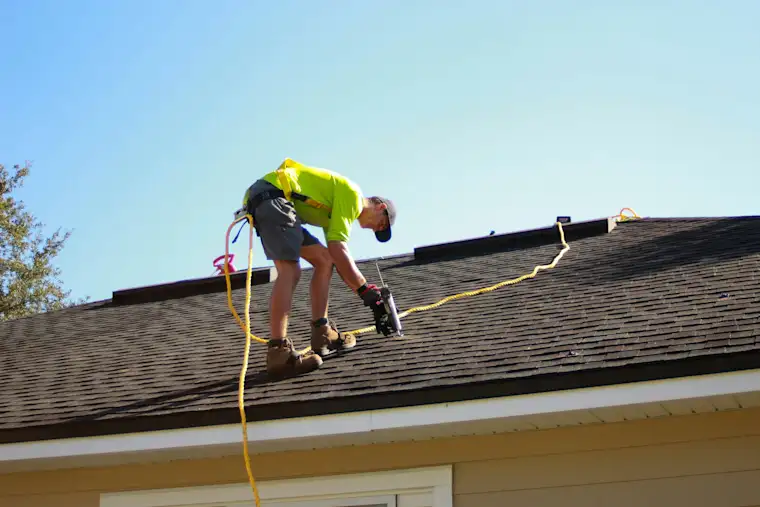
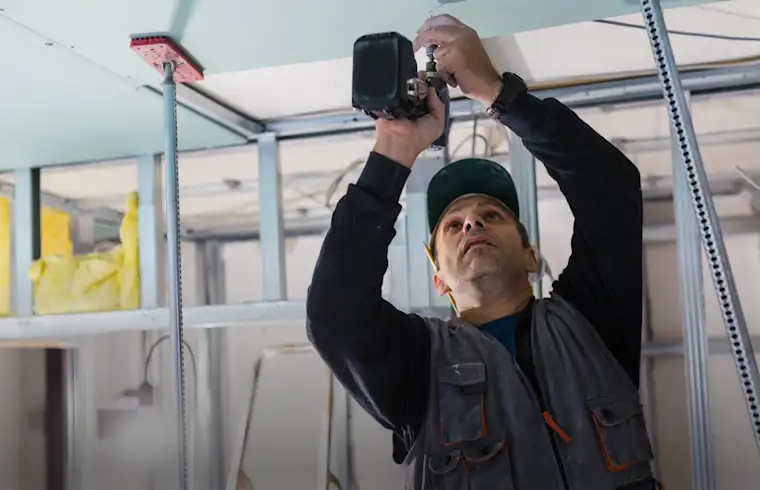

Why business insurance is essential in construction
Working in construction puts you in daily contact with clients, other trades, and property you don't own. From a kitchen fit-out to a roof on a live site, these activities share common exposures:
Injury to other people: another trade, a client's family, a delivery driver, or someone walking past the scaffold.
Damage to property you didn't install: drilling into a wall, lifting a floor, or digging in a garden that isn't yours.
Damage to finished work: a surface or fitting marked while you work beside what another trade signed off last week.
Claims that arrive long after the job: damp appearing behind a wall you worked on, or someone hurt on site who brings a claim a year later.

What is construction liability insurance?
How it works: someone outside your business is injured, or their property is damaged, because of your work. They claim against you, and Insify handles the claim and pays what you owe, up to your cover limit and after your excess.
What it covers: a fixed limit of €2.5 million per claim and €5 million per insurance year. Check that this meets any contract or tender requirement before you buy.
Cover that fits your trade: you declare the work you actually do, and cover is built around it.
The objects and sites in your care: cover for defined damage to third-party property you handle or work on is included. The limit is €25,000 per claim and €50,000 per insurance year for a business with one person, or €50,000 per claim and €100,000 per year if more people work in the business. Use the headcount definition in your quote, which includes more than employees on the payroll.
Your excess: the excess is the share of a claim you pay yourself before cover starts. With annual turnover of €500,000 or less you can choose €0, €250, €500 (the default), €1,000 or €2,500. Above that the options are €500, €1,000 (the default) and €2,500.
Two optional extras: you can add employers' liability for claims from employees and other people treated as employees under the policy, with €13 million per claim and per insurance year, including applicable defence costs. Optional faulty craftsmanship cover can pay necessary third-party access and reinstatement costs to reach a defect. It does not pay to correct or redo your own faulty work. It has an extra €500 excess on top of your selected excess.
Is it mandatory: Construction liability isn't required by law in Ireland. However, contracts and site rules usually require it, and local-authority permits and public tenders set their own minimum. Cover starts from €21.84 per month, including taxes.
Who needs it: Any roofer, electrician, plumber, carpenter, plasterer, tiler, painter or landscaper, whether you work on your own or run a crew.
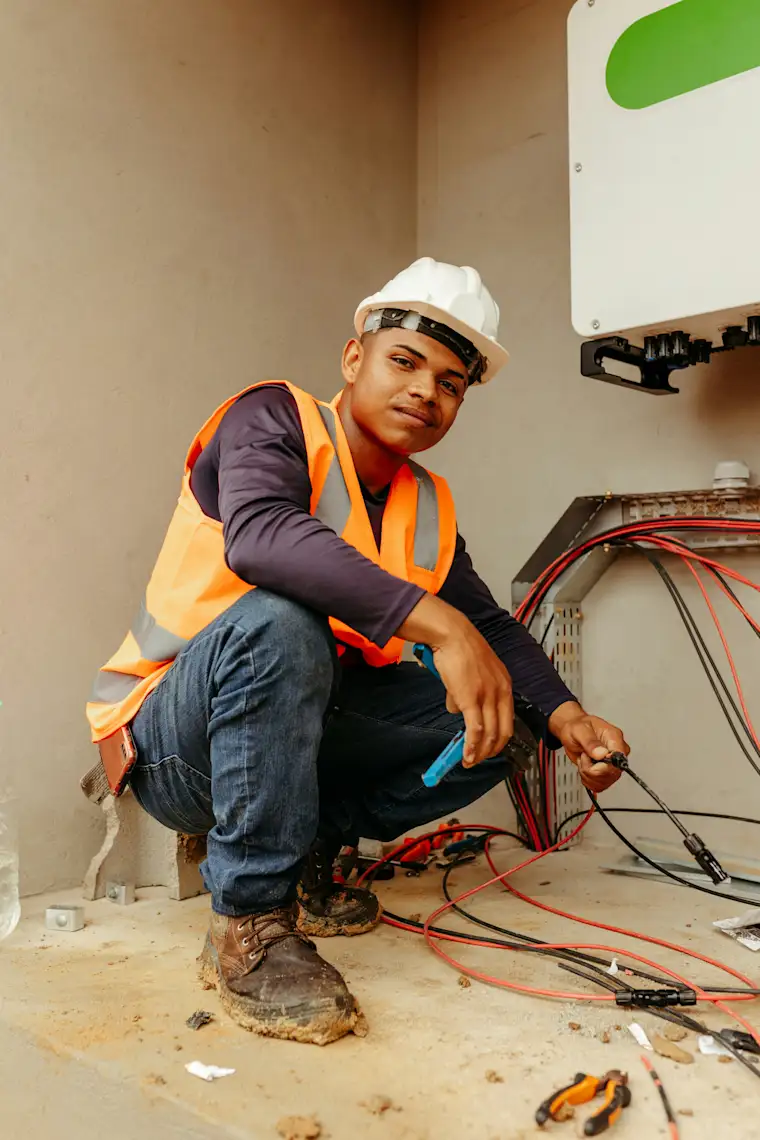
What's covered
The work covered depends on the trades you declare. Pick your trade above for its cover details, and check the activities and conditions shown in your quote. Roofing and fire-hazard work need the applicable declaration and cover. Structural work and certain high-risk sites are excluded; this liability policy does not insure your own tools or other property.
Selling construction goods and materials alongside your work
Plastering walls and ceilings, for declared plastering, roofing or interior fit-out work
Building, fitting, altering, maintaining and repairing wooden floors, walls, ceilings, stairs, doors and windows, for roofers, carpenters and interior fit-out contractors
Building, fitting, altering, maintaining and repairing electrical installations, including lighting and power, for electricians and fibre-optic installers
Connecting electrical equipment and simple low-voltage wiring, such as internet and network cabling, for electricians and fibre-optic installers
Installing, maintaining and repairing fibre-optic cable, for electricians and fibre-optic installers
Installing, altering, maintaining and repairing gas pipework inside a building, for plumbers and heating and air-conditioning installers where gas work is declared and included in the schedule
Laying wooden floors, including parquet and laminate, for floor layers and interior fit-out contractors
Small jobs around a building, such as painting, wallpapering, plasterboarding and tiling, for handyman services
Laying streets, pavements, yards, driveways and garden terraces, for pavers
Installing, altering, maintaining and repairing plumbing, heating, water and sewage systems, for plumbers
Work on specialist installations, such as pools, solar panels or lifts, where excluded for your declared trade; check the activity conditions in your quote
Asphalting, such as surfacing streets or roads, for handyman services and pavers
Pouring concrete and cement floors, for handyman services and floor layers
Paint-spraying outside a building, for handyman services and painters
Trimming or felling trees over 3 metres, for handyman services and landscapers
Damage to buildings or land caused by dewatering work, including groundwater lowering, pressure-relief dewatering and recharge dewatering, for fibre-optic installers
Damage to underground or underwater cables and pipes where the required utility search wasn't carried out beforehand, or the applicable excavation guidance wasn't followed, for fibre-optic installers
Cover and exclusions shown are indicative and non-contractual. Only the terms of your policy apply.
Some examples...
A plumber drills into a hidden pipe while fitting a bathroom, and water runs through the kitchen ceiling of the flat below.
A roofer drops a bundle of slates from the scaffold, and a passer-by at the site gate claims for a fractured shoulder and lost earnings.
A plumber installs a pipe that needs repairing behind tiles fitted by another contractor. With optional faulty craftsmanship cover, the necessary cost of another contractor removing and reinstating those tiles may be covered. Repairing the plumber's own faulty pipe is not covered.
A plumber drills into a hidden pipe while fitting a bathroom, and water runs through the kitchen ceiling of the flat below.
A roofer drops a bundle of slates from the scaffold, and a passer-by at the site gate claims for a fractured shoulder and lost earnings.
A plumber installs a pipe that needs repairing behind tiles fitted by another contractor. With optional faulty craftsmanship cover, the necessary cost of another contractor removing and reinstating those tiles may be covered. Repairing the plumber's own faulty pipe is not covered.
Examples are for illustrative purposes only. Compensation depends on the exact circumstances of the claim. No rights can be derived from these examples.
Your business insurance with Insify SmartGuide
Taking out insurance can be quick. Making sure you have the right cover is another matter. With Insify SmartGuide, you don't sign a contract blindly. You ask all your questions, and get clear, immediate and personalised answers, before you take out a policy.
Are you covered if you accidentally damage a client's equipment while working?
What excess should you choose?
Are you protected in the event of a dispute with a client?
Insify SmartGuide guides you step by step to understand what's covered, what isn't, and why. In just a few clicks, you build insurance that's truly tailored to your business, with complete confidence. Try Insify SmartGuide. Understand your insurance before you need it.

More than 50,000 entrepreneurs trust us
When I had to make a claim, I was amazed how quickly and efficiently it was handled. Within a few days I had a resolution.
Very friendly, quick and thorough. It gives me real confidence in taking out the cover. The company feels genuinely transparent, exactly what I look for. You don't find that often.
Very friendly, quick and thorough. It gives me real confidence in taking out the cover. The company feels genuinely transparent, exactly what I look for. You don't find that often.
When I had to make a claim, I was amazed how quickly and efficiently it was handled. Within a few days I had a resolution.
The cover itself was sorted quickly, and when I later needed support I got that fast too.
Very friendly, quick and thorough. It gives me real confidence in taking out the cover. The company feels genuinely transparent, exactly what I look for. You don't find that often.
When I had to make a claim, I was amazed how quickly and efficiently it was handled. Within a few days I had a resolution.
The cover itself was sorted quickly, and when I later needed support I got that fast too.
Insurance guides for construction and trades
 InsuranceWhat does it cost a tradesman when a job goes wrong? Five years of real claims
A cable you could not see, a joint that was not quite tight, a ladder that slides. Real figures on how often things go wrong on the job in your trade, and what the bill looks like.
 InsuranceWhat is public liability insurance, and what does it cover?
Someone else gets hurt, or their property gets damaged, and they hold you responsible. Here is what sits inside it, what sits outside, and how the limit you pick changes the policy.
InsuranceWhat does it cost a tradesman when a job goes wrong? Five years of real claimsA cable you could not see, a joint that was not quite tight, a ladder that slides. Real figures on how often things go wrong on the job in your trade, and what the bill looks like.
InsuranceWhat is public liability insurance, and what does it cover?Someone else gets hurt, or their property gets damaged, and they hold you responsible. Here is what sits inside it, what sits outside, and how the limit you pick changes the policy.
Answers to your questions about insurance for construction trades
Public liability covers your legal liability when insured work injures someone outside your business or damages their property. Construction cover has a fixed limit of €2.5 million per claim and €5 million per year, with a lower limit within your cover for defined damage to property in your care. You can add employers' liability and faulty craftsmanship cover. The latter covers defined third-party access and reinstatement costs, not redoing your own faulty work. Your own tools, plant, materials, vehicles and works in progress are not insured by this liability policy.
Cover starts from €21.84 per month, including taxes, for the construction trades on this page. Your own premium depends on the trades you declare, your annual turnover and the excess you choose, so 2 roofers on the same street can pay different amounts. A higher excess lowers the monthly premium because you carry more of a small claim yourself: on a €4,000 claim with a €500 excess you pay €500 and Insify covers the remaining €3,500. Adding employers' liability or faulty craftsmanship cover changes the price as well. You see your own price before you buy, and you can cancel any day.
All 16: roofing, handyman services, paving, electrical work, fibre optic installation, plumbing and sanitary fitting, heating and air-conditioning installation, plastering, carpentry, floor laying including parquet, painting and decorating, shutters, blinds and awnings, tiling, bricklaying and pointing, gardening and landscaping, and interior construction. Cover is for businesses of up to 30 people. The turnover limit depends on the trade: up to €10 million for 15 of them, and up to €2.5 million for roofing. Two of these trades sit in more than one sector, so interior fit-out work also appears behind our furniture and home insurance hub.
It is not required by law in Ireland. In practice it is required by the people who let you on site: principal contractors and main contractors ask for a certificate before you start, site rules make it a condition of access, local authorities ask for it with permits and road openings, and public tenders set their own minimum level of cover. Private clients increasingly ask too, particularly on home extensions and refurbishments. The construction policy carries a fixed €2.5 million per claim and €5 million per year, so you can answer that question with one figure rather than a range.
Your policy can cover liability for accidental damage to a client's property caused by your insured work, subject to the applicable limit, excess and exclusions. Defined damage to property you handle or work on has its own limit for property in your care. Correcting your own defective work remains your responsibility, even if you add faulty craftsmanship cover. Declare all the work you do so your quote reflects your activities.
Employers' liability is not compulsory in Ireland, unlike the United Kingdom, and it is an optional cover on our construction policy rather than part of it. It pays claims brought by the people who work for you, up to €13 million per claim. Whether someone counts as your employee or as a genuinely self-employed contractor is a question about the working arrangement, not about the policy, so take advice if you are not certain. A subcontractor running their own business should carry their own public liability, and it is worth asking for the certificate before they start. Principal contractors often ask you for employers' liability before a crew comes on site, even though no statute requires it.
No. This policy covers your liability to other people, not your own property. In Ireland the phrase construction insurance usually means contract works, plant and all-risks cover for the job itself, and that is a different product which Insify does not sell. So your van, hand and power tools, hired plant, materials on site, stock and the works in progress are not covered here, and neither is the profit you lose when a job goes wrong. What is covered is injury and damage to others, plus the fittings, finished surfaces and parts of the building in your care while you work on them.